What Is a Bogey in Golf? Golf Scoring Explained
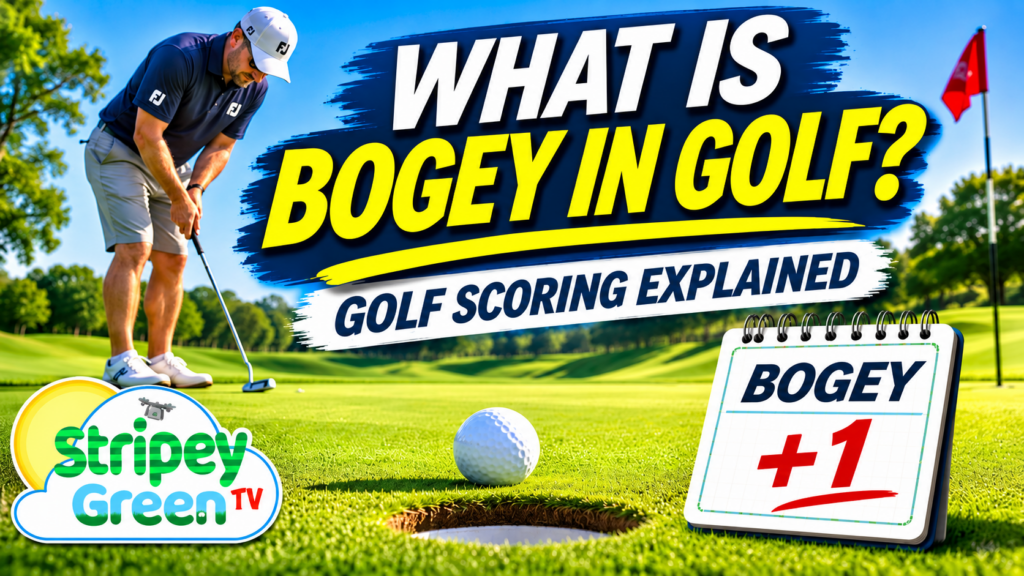
A bogey in golf is a score of one stroke over par on a single hole. A four on a par 3, a five on a par 4 and a six on a par 5 are all bogeys. But is a bogey really a bad score? For a club golfer like me, not necessarily! In fact, bogeys can be part of a really good round of golf, as I’ll explain below using an example from my own golf at Flixton.
What score is a bogey?
| Hole par | Bogey score |
|---|---|
| 3 | 4 |
| 4 | 5 |
| 5 | 6 |
| 6 | 7 |
A bogey is one stroke worse than par. Two over is a double bogey, three over a triple bogey and four over a quadruple bogey.
Is a bogey really a bad score?
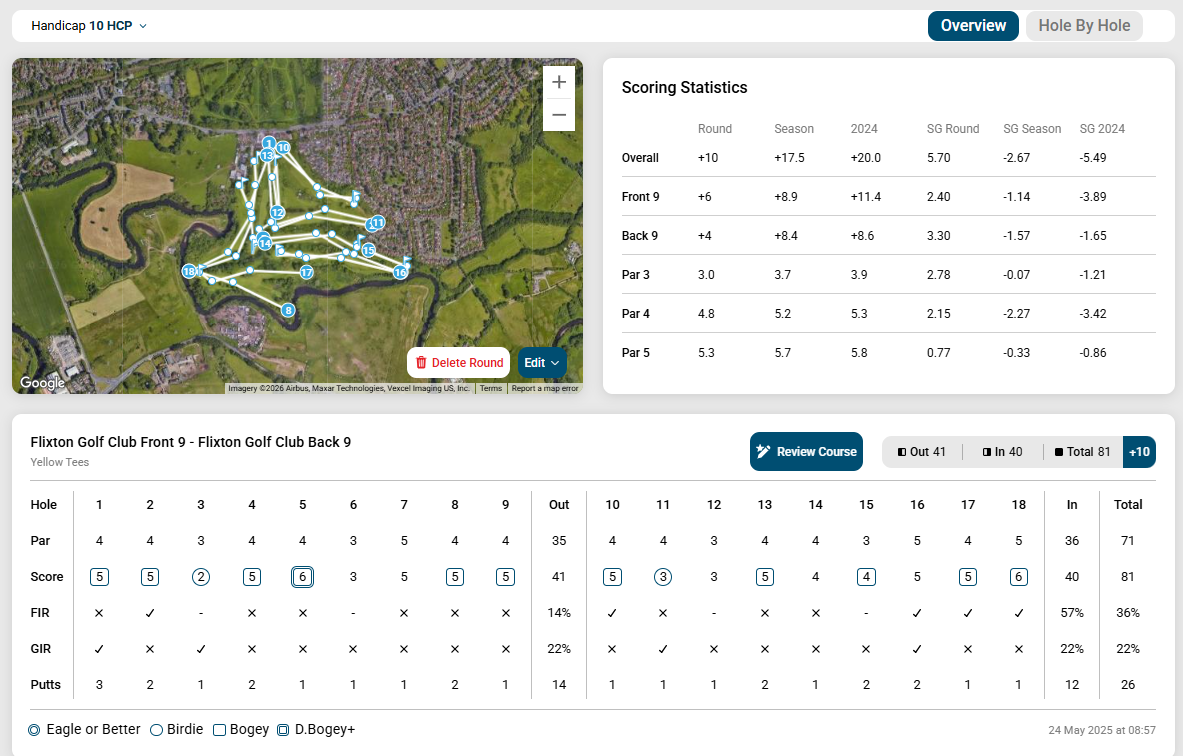
On 24 May 2025, I shot a gross 81 at Flixton Golf Club in a fourball better ball competition off the white tees. That’s ten over par on our par 71 course. Looking back at my Shot Scope scorecard, I made two birdies, five pars, ten bogeys and one double bogey. More than half my holes were bogeys, yet I was delighted with my score.
Shot Scope displays yellow tees for this round, but I played off the whites. I only upload some of my rounds, so these are examples from my recorded golf rather than a complete playing history.
What is bogey golf?
A bogey on every hole of an 18-hole course is 18 over par. At Flixton that would be a gross 89. On a par 72 course it would be 90. For many amateur golfers, playing consistent bogey golf is a useful target.
Gross bogey versus nett bogey
A gross bogey is one over par before handicap adjustments. If you receive one handicap stroke on a par 4 and score five, your gross bogey becomes a nett par.
How many Stableford points is a bogey?
A nett bogey earns one point in standard Stableford. A gross bogey on a hole where you receive one stroke earns two points. Read my Stableford scoring guide for more examples.
Avoiding the big numbers
On 15 August 2026, I birdied the sixth and seventh at Flixton, then scored an eight on the par 4 eighth. That is a quadruple bogey, also known as a snowman. I still finished with a gross 87. Sometimes accepting a bogey rather than attempting a miracle recovery shot can be the difference between a good round and a disappointing one.
Where does the term bogey come from?
The term has roots in British golf in the late nineteenth century, when the bogey score represented a target score for a hole. Its modern meaning is one stroke over par.
Want to know how the other golf scoring terms compare? Take a look at my complete guide to golf scoring, from condors and albatrosses to bogeys and snowmen.
Final thoughts
You don’t need spectacular golf to put together a good score. For a mid-handicap golfer like me, avoiding the disasters is often more important than chasing birdies. A bogey isn’t always a bad result.
Bye for now!